Islam teaches Muslims how to remember Allah and maintain good manners in almost every part of daily life. Even something as ordinary as entering the toilet has specific guidance from the Sunnah of Prophet Muhammad (PBUH). One of the important Islamic duas to learn is the dua before entering the toilet. This short supplication asks Allah for protection from the evil and harmful beings associated with such places. The Prophet Muhammad (PBUH) taught Muslims to seek Allah’s protection before entering the place where they relieve themselves. Learning this dua and making it a regular habit is a simple way to follow the Sunnah and remember Allah throughout the day.
In this article, we will explain the dua before entering the toilet, washroom or bathroom, its Arabic text, transliteration, English translation, the Hadith that supports it, when to recite it, why Muslims say it, and the important toilet manners taught in Islam.
Dua Before Entering the Toilet
The authentic dua commonly recited before entering the toilet is:
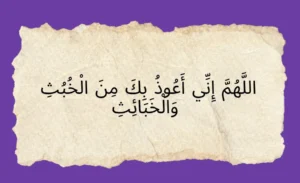
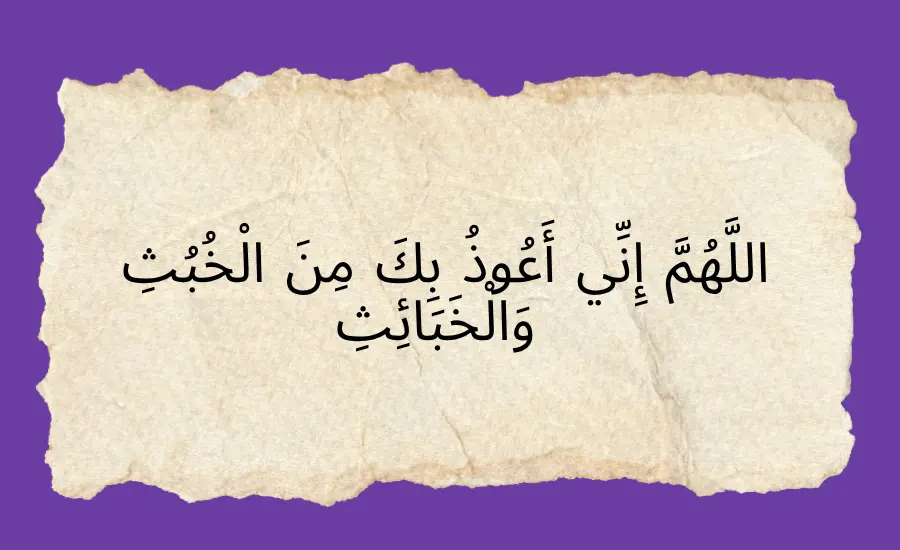
Arabic: اللَّهُمَّ إِنِّي أَعُوذُ بِكَ مِنَ الْخُبُثِ وَالْخَبَائِثِ
Transliteration: Allahumma inni a’udhu bika minal-khubuthi wal-khaba’ith.
English Translation: O Allah, I seek refuge in You from the male and female devils.
This is a short but meaningful dua. It teaches the believer to turn to Allah for protection before entering a place where one should maintain particular manners and privacy.
Hadith About the Dua Before Entering the Toilet
The dua is established through an authentic Hadith from Anas ibn Malik (RA). Anas ibn Malik (RA) reported:
Arabic:
كَانَ النَّبِيُّ صلى الله عليه وسلم إِذَا دَخَلَ الْخَلَاءَ قَالَ اللَّهُمَّ إِنِّي أَعُوذُ بِكَ مِنَ الْخُبُثِ وَالْخَبَائِثِ
Transliteration: Kana an-nabiyyu sallallahu alayhi wa sallam idha dakhala al-khala’a qala: Allahumma inni a’udhu bika minal-khubuthi wal-khaba’ith.
English Translation: The Prophet (PBUH), when he entered the toilet, would say: “O Allah, I seek refuge in You from the male and female devils.” – Reference: Sahih al-Bukhari 142, Sahih Muslim 375
This Hadith is the main evidence for reciting the dua before entering the toilet. It shows that seeking Allah’s protection before entering the toilet is part of the Sunnah of Prophet Muhammad (PBUH).
What Does the Dua Before Entering the Toilet Mean?
The dua contains a direct request for protection “Allahumma inni a’udhu bika”, meaning “O Allah, I seek refuge in You.” The word a’udhu comes from the meaning of seeking protection or refuge. The believer is acknowledging that Allah is the ultimate source of protection. The dua then says “minal-khubuthi wal-khaba’ith”. This phrase is commonly understood as referring to male and female devils or evil beings. Therefore, the overall meaning is a request to Allah:
O Allah, protect me from the male and female devils.
This simple sentence teaches an important Islamic principle: a Muslim should seek Allah’s protection from unseen harm and evil.
Why Do Muslims Recite Dua Before Entering the Toilet?
The toilet is a place where a person should maintain privacy and particular manners. The Prophet Muhammad (PBUH) taught Muslims to seek Allah’s protection before entering. The Hadith does not merely give us a phrase to memorize. It teaches us to remember Allah before entering a place associated with relieving oneself. The dua also reminds us that believers should turn to Allah for protection in every situation.
1. It Follows the Sunnah of Prophet Muhammad (PBUH)
The greatest reason to recite this dua is that Prophet Muhammad (PBUH) himself taught and practiced it. Anas ibn Malik (RA) specifically reported that the Prophet (PBUH) would say this dua when entering the toilet. Following the Sunnah means trying to imitate the guidance and manners taught by the Messenger of Allah. Even small daily habits can become acts of worship when they are done sincerely for Allah and according to the Sunnah.
2. It Seeks Protection From Shaytan
The dua asks Allah for protection from the khubuth and khaba’ith, commonly explained as male and female devils. This teaches Muslims that Shaytan and evil should never be taken lightly. A believer does not rely only on their own strength. They seek Allah’s protection. The Quran also teaches Muslims to seek refuge in Allah from the whisperings of Shaytan. Allah says:
Arabic:
وَقُلْ رَبِّ أَعُوذُ بِكَ مِنْ هَمَزَاتِ الشَّيَاطِينِ
وَأَعُوذُ بِكَ رَبِّ أَنْ يَحْضُرُونِ
Transliteration: Wa qul rabbi a’udhu bika min hamazatish-shayatin. Wa a’udhu bika rabbi an yahdurun.
English Translation: And say, “My Lord, I seek refuge in You from the incitements of the devils. And I seek refuge in You, my Lord, lest they be present with me.” – Quran 23:97-98
The dua before entering the toilet reflects this broader Quranic principle of seeking Allah’s protection from Shaytan.
3. It Turns an Ordinary Habit Into an Act of Worship
Going to the toilet is an ordinary part of human life. Islam teaches that even ordinary activities can be connected to worship when a person follows the Sunnah. Before entering the toilet, saying this short dua takes only a few seconds. Yet those few seconds remind the believer of Allah and the guidance of Prophet Muhammad (PBUH). This is one of the beautiful aspects of Islamic daily life. Worship is not limited to Salah, fasting, or charity. Following the Sunnah in everyday matters can also bring spiritual benefit.
4. It Builds the Habit of Remembering Allah
A Muslim should try to remember Allah throughout the day. The dua before entering the toilet is one of many daily duas that help develop this habit. When a person repeatedly says “Allahumma inni a’udhu bika minal-khubuthi wal-khaba’ith”, it becomes part of their daily routine. This can help Muslims become more conscious of Allah in ordinary moments.
5. It Teaches Dependence Upon Allah
The words inni a’udhu bika, “I seek refuge in You,” express dependence upon Allah. A believer recognizes that Allah is the ultimate protector. This attitude of turning to Allah is important in every part of life. When we are afraid, we seek Allah’s protection. When we are uncertain, we ask Allah for guidance. When we face difficulty, we ask Allah for help. The toilet dua is another small reminder of this important relationship between the believer and Allah.
When Should You Recite the Toilet Dua?
The dua should be recited before entering the toilet. This is important because the Sunnah reports the Prophet Muhammad (PBUH) saying it when entering the place. A Muslim should ideally say the dua before entering. For example:
- Approach the toilet.
- Recite the dua.
- Enter with the left foot.
- Maintain proper Islamic manners and privacy.
- Leave after completing your need.
- Recite the appropriate dua after leaving.
This makes the entire process part of following the Sunnah.
Should You Say Bismillah Before Entering the Toilet?
Scholars have discussed saying Bismillah before entering the toilet as part of seeking protection from the jinn. There is a narration reported from Ali (RA):
Arabic: سَتْرُ مَا بَيْنَ أَعْيُنِ الْجِنِّ وَعَوْرَاتِ بَنِي آدَمَ إِذَا دَخَلَ أَحَدُهُمُ الْخَلَاءَ أَنْ يَقُولَ بِسْمِ اللَّهِ
Transliteration: Sitru ma bayna a’yunil-jinni wa awrati bani Adama idha dakhala ahaduhumul-khala’a an yaqula Bismillah.
Meaning: The phrase “Bismillah” is mentioned in a report concerning protection and concealment from the jinn when a person enters the toilet.
The exact grading and discussion of this narration are treated differently by hadith scholars. Therefore, the safest universally established practice is to give particular attention to the authentic dua: Allahumma inni a’udhu bika minal-khubuthi wal-khaba’ith.
Entering the Toilet With the Left Foot
Islamic manners also include entering the toilet with the left foot and leaving with the right foot. This is part of the broader etiquette traditionally taught by Muslim scholars concerning entering and leaving places of this nature. The commonly taught sequence is:
- Before entering: Recite the dua.
- When entering: Enter with the left foot.
- When leaving: Exit with the right foot.
- After leaving: Recite the dua for leaving the toilet.
This is an easy Sunnah habit to develop.
Dua After Leaving the Toilet
The Sunnah also teaches a dua after leaving the toilet. The commonly reported dua is:
Arabic: غُفْرَانَكَ
Transliteration: Ghufranak.
English Translation: I seek Your forgiveness.
This short dua is reported from Aishah (RA), who said that when the Prophet Muhammad (PBUH) came out of the toilet, he would say “Ghufranak” – Reference: Sunan Abi Dawud 30, Jami al-Tirmidhi 7
The believer therefore begins by seeking Allah’s protection before entering and seeks Allah’s forgiveness after leaving.
Why Does the Prophet (PBUH) Say “Ghufranak” After Leaving?
The scholars have discussed the wisdom behind this short supplication. One commonly mentioned explanation is that the person has been relieved from a physical need and should remember Allah’s blessings and seek forgiveness. It reminds us that even basic human needs are part of the human condition. The Prophet Muhammad (PBUH) taught Muslims to remain humble and connected to Allah in both ordinary and important moments.
Islamic Toilet Etiquette
The dua before entering is only one part of Islamic toilet manners. Muslims are encouraged to maintain cleanliness, modesty, privacy, and respect. Important etiquette includes:
1. Enter With the Left Foot: The commonly taught Sunnah is to enter the toilet with the left foot.
2. Recite the Dua Before Entering: Say “Allahumma inni a’udhu bika minal-khubuthi wal-khaba’ith.”
3. Maintain Privacy: Islam places great importance on modesty and covering the private parts. A person should ensure proper privacy when using the toilet.
4. Avoid Unnecessary Conversation: The toilet is not a place for casual conversation. A Muslim should complete the need and leave rather than remain inside unnecessarily.
5. Maintain Cleanliness: Islam places great importance on cleanliness. After relieving oneself, the person should clean themselves properly using the appropriate method.
6. Avoid Facing or Turning Your Back Toward the Qiblah Where Prohibited: There are authentic Hadiths concerning the direction of the Qiblah while relieving oneself. Abu Ayyub al-Ansari (RA) reported that the Prophet Muhammad (PBUH) instructed Muslims:
Arabic: إِذَا أَتَيْتُمُ الْغَائِطَ فَلَا تَسْتَقْبِلُوا الْقِبْلَةَ وَلَا تَسْتَدْبِرُوهَا
Transliteration: Idha ataytumul-gha’ita fala tastaqbilul-qiblata wa la tastadbiruha.
English Translation: When you go to relieve yourselves, do not face the Qiblah or turn your backs toward it. – Reference: Sahih al-Bukhari and Sahih Muslim
There are detailed scholarly discussions about how this ruling applies to indoor toilets, buildings, and different circumstances. Therefore, Muslims should follow the guidance of reliable scholars regarding specific situations.
7. Use the Right Hand for Good and the Left Hand for Cleaning: Islam teaches Muslims to distinguish between the right and left hands in matters of cleanliness and everyday etiquette. The left hand is traditionally used for cleaning oneself after relieving oneself, while the right hand is used for honorable and clean activities.
8. Wash Your Hands: After using the toilet, washing the hands properly is an important part of hygiene and cleanliness.
What Does Islam Say About Cleanliness?
The Islamic approach to toilet etiquette is part of a much wider emphasis on purity and cleanliness. Allah says:
Arabic: إِنَّ اللَّهَ يُحِبُّ التَّوَّابِينَ وَيُحِبُّ الْمُتَطَهِّرِينَ
Transliteration: Innallaha yuhibbut-tawwabeena wa yuhibbul-mutatahhirin.
English Translation: Indeed, Allah loves those who are constantly repentant and loves those who purify themselves. – Quran 2:222
Cleanliness in Islam is therefore not simply about physical appearance. It is connected with worship, purity, discipline, and spiritual awareness.
Can You Recite the Dua Silently?
Yes. The toilet dua is a supplication, and it can be said quietly. In fact, the appropriate etiquette is to avoid unnecessary speech inside the toilet. The important point is to say the dua before entering rather than waiting until you are already inside.
Can Children Learn the Dua Before Entering the Toilet?
Yes. Teaching children daily Islamic duas is an excellent way to help them develop Islamic manners from a young age. Parents can teach children:
Allahumma inni a’udhu bika minal-khubuthi wal-khaba’ith.
Start by teaching the meaning:
“O Allah, I seek refuge in You from the male and female devils.”
Once the child understands the meaning, encourage them to memorize the Arabic gradually. Daily duas become easier to remember when they are connected with regular routines.
What If You Forget the Dua?
If you forget the dua, do not become anxious. The purpose of learning Sunnah duas is to develop good habits, not to create unnecessary hardship. If you remember before entering, say it. If you forget, continue learning it and try to remember it next time. Islam encourages consistency and sincere effort.
Is the Dua Before Entering the Toilet Compulsory?
No. The dua is a Sunnah and recommended practice, not one of the obligatory acts of entering or using the toilet. A person should learn it and make it part of their daily routine because it was taught by Prophet Muhammad (PBUH). However, forgetting it does not mean that a person’s basic acts of worship or cleanliness are automatically invalid. This distinction is important because Muslims should understand the difference between obligatory acts, Sunnah practices, recommended manners, and personal habits.
Can You Recite Other Duas Before Entering?
The best approach is to follow the authentic supplication taught by Prophet Muhammad (PBUH). The established wording is:
Allahumma inni a’udhu bika minal-khubuthi wal-khaba’ith.
There is no need to invent additional formulas or attribute unsupported promises to the Prophet (PBUH). Islamic worship should be based on authentic evidence.
Spiritual Lessons From the Dua Before Entering the Toilet
Although the dua is very short, it contains several valuable lessons.
- Seek Allah’s Protection: The believer recognizes that Allah is the ultimate protector.
- Remember Allah in Daily Life: Islam does not separate faith from ordinary life. Even daily routines can remind us of Allah.
- Follow the Sunnah: The Prophet Muhammad (PBUH) taught Muslims practical manners for everyday activities.
- Maintain Modesty and Cleanliness: Islam places great importance on privacy, cleanliness, and personal hygiene.
- Avoid Unnecessary Speech: The toilet is a place for a specific need, not for casual conversation or unnecessary activity.
- Develop Consistent Habits: A short dua becomes powerful as a daily habit because it keeps the heart connected to Allah.
A Simple Daily Routine
For beginners, the toilet etiquette can be remembered with a simple sequence:
- Before entering: Allahumma inni a’udhu bika minal-khubuthi wal-khaba’ith.
- Enter: Left foot first.
- Inside: Maintain privacy, cleanliness, and proper etiquette.
- After leaving: Right foot first.
- After leaving: Ghufranak.
This simple routine makes an ordinary daily activity an opportunity to follow the Sunnah.
Conclusion
The dua before entering the toilet is one of the simplest daily duas in Islam, but it carries an important lesson. Prophet Muhammad (PBUH) taught Muslims to seek Allah’s protection before entering the place where they relieve themselves. The authentic dua is “Allahumma inni a’udhu bika minal-khubuthi wal-khaba’ith”, which means “O Allah, I seek refuge in You from the male and female devils.”
Learning this dua allows Muslims to follow the Sunnah in an ordinary part of everyday life. It also teaches believers to turn to Allah for protection and to remember Him throughout the day. Islamic toilet etiquette goes beyond this single dua. Muslims are encouraged to maintain privacy, modesty, cleanliness, and proper manners when entering and leaving the toilet. Entering with the left foot, reciting the prescribed dua before entering, cleaning oneself properly, and saying Ghufranak after leaving are all part of the broader Islamic approach to everyday cleanliness and remembrance.
For parents, teaching this dua to children is also a valuable way to introduce them to daily Sunnah practices. When small Islamic habits are learned early and practiced consistently, they can become a natural part of a Muslim’s life. The beauty of this Sunnah is that it takes only a few seconds. Yet those few seconds remind us that Allah is our Protector and that the guidance of Islam reaches even the smallest details of our daily lives.
May Allah help us follow the Sunnah of Prophet Muhammad (PBUH), remember Him throughout our daily lives, maintain purity and good manners, and protect us from every form of evil. Ameen.
FAQs
1. What is the dua before entering the toilet?
The dua is “Allahumma inni a’udhu bika minal-khubuthi wal-khaba’ith.” It means: “O Allah, I seek refuge in You from the male and female devils.”
2. What Hadith mentions the dua before entering the toilet?
Anas ibn Malik (RA) reported that Prophet Muhammad (PBUH), when entering the toilet, would say this dua. It is recorded in Sahih al-Bukhari 142 and Sahih Muslim 375.
3. When should I recite the toilet dua?
The dua should be recited before entering the toilet. It is part of the Sunnah etiquette associated with entering the place where a person relieves themselves.
4. Why do Muslims recite Dua before entering the toilet?
Muslims recite it to follow the Sunnah of Prophet Muhammad (PBUH) and to seek Allah’s protection from the male and female devils mentioned in the supplication.
5. What is the dua after leaving the toilet?
The commonly reported dua is “Ghufranak”, which means “I seek Your forgiveness.” It is reported from Aishah (RA) that the Prophet Muhammad (PBUH) would say this after leaving the toilet.
6. Should I enter the toilet with my left or right foot?
The commonly taught Islamic etiquette is to enter with the left foot and leave with the right foot. Muslims should also recite the dua before entering and maintain cleanliness, modesty, and privacy.